
Algorithmic Accountability and the Transparency Paradox
An analysis of the discrepancy between corporate claims of 'algorithmic fairness' and the underlying opacity of proprietary black-box models.
Examines how data science institutions manage public scrutiny by projecting an image of objective neutrality while maintaining guarded, non-auditable models.
LHS Lens Analysis
An analytical framework for exploring how narratives, identity, institutions, and communication may shape understanding. Does not assert conclusions as fact.
Related LHS IP for this topic
Existing books, rare archives, reports, and podcast panels that engage Algorithmic Accountability and the Transparency Paradox — fully functional and ready to dive into.
Rare Book Archive
· 3 matches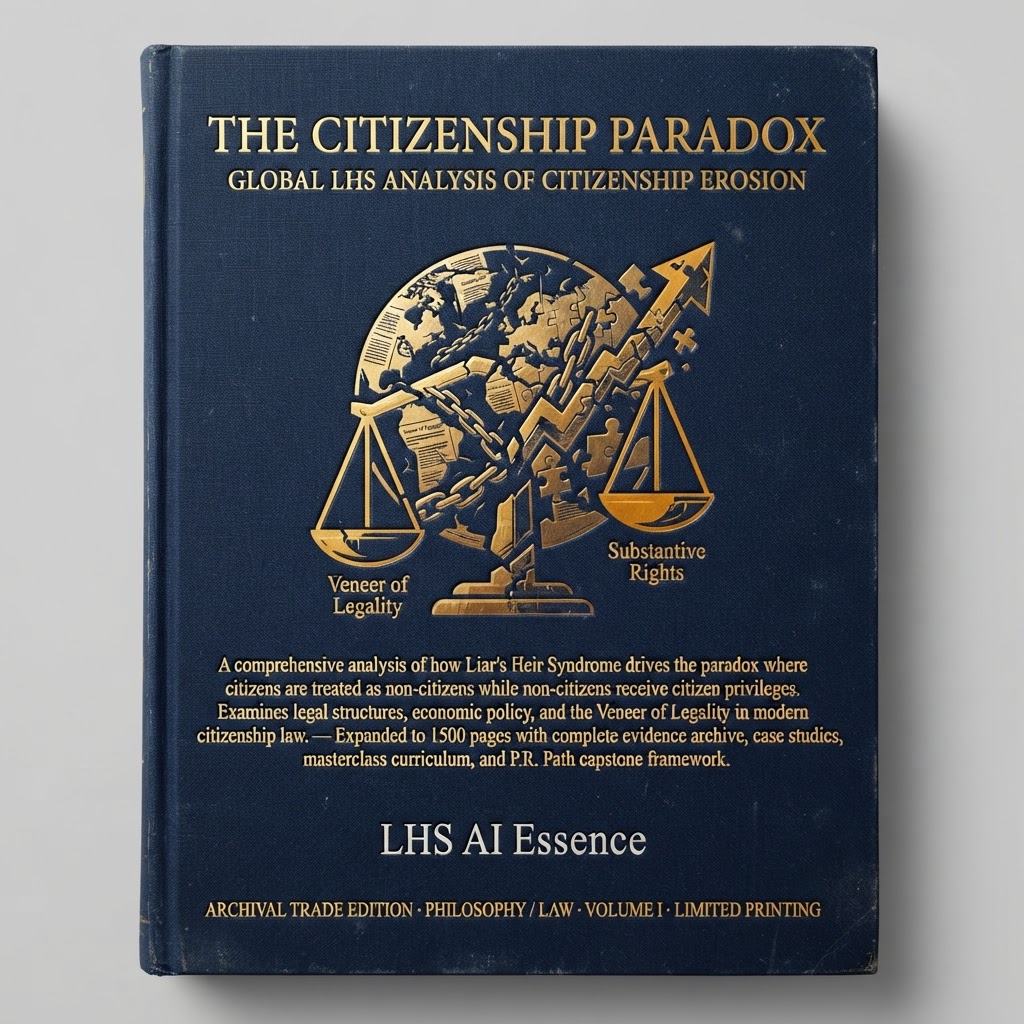
The Citizenship Paradox: Global LHS Analysis of Citizenship Erosion
by LHS AI Essence
From $26.99

LHS and the Individual
by LHS AI Essence
From $26.99
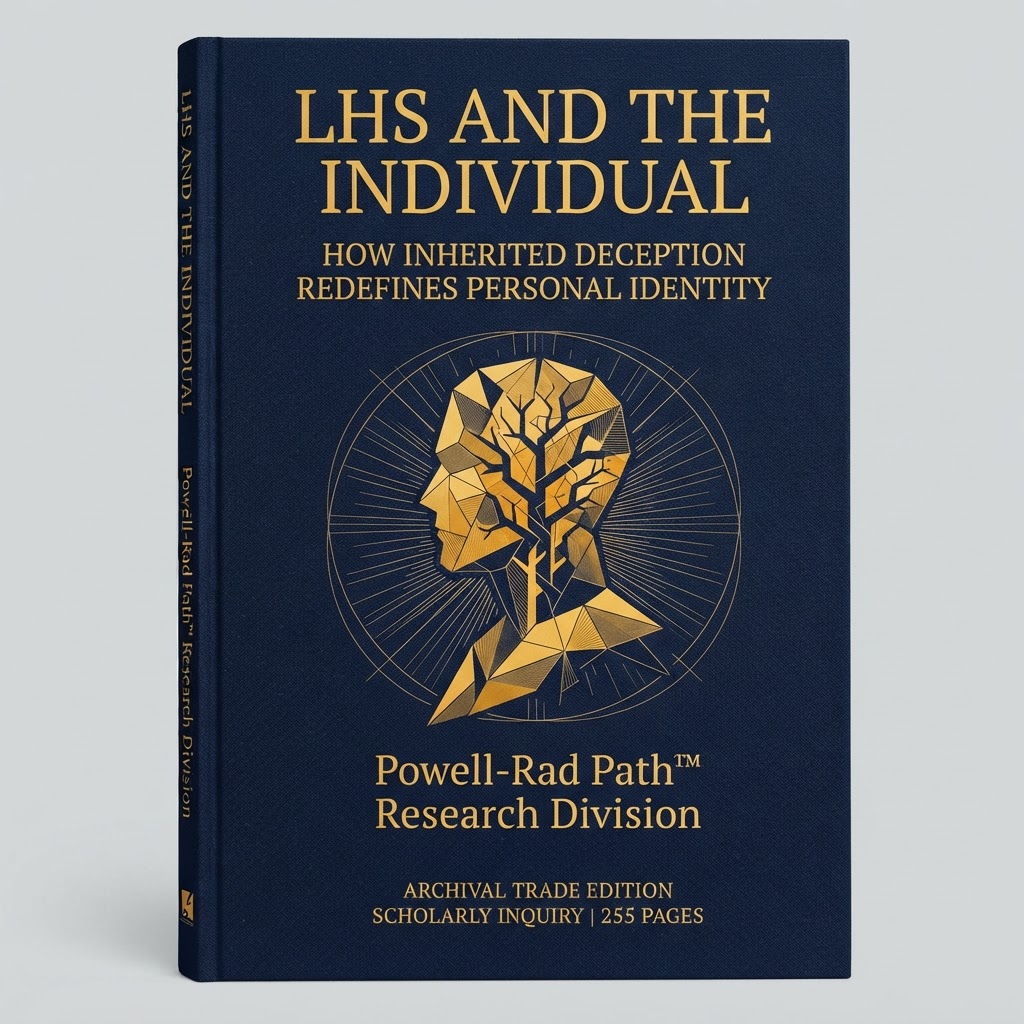
LHS and the Individual: How Inherited Deception Redefines Personal Identity
by Powell-Rad Path™ Research Division
From $19.99
Research Reports
· 1 matchAI Essence Podcast Panels
· 5 matchesDonald Trump Is Not Your NiggX: Corporate Media and the LHS Narrative Control Engine — Special Collector's Edition
~3 min panel
The Inheritance of Belief (Scholar Series Source) — Special Collector's Edition
~2 min panel
The Healing Inheritance (Scholar Series Source) — Special Collector's Edition
~3 min panel
The Complexity Mirage
~3 min panel
Japan and LHS
~2 min panel
More IP is published by the AI Essence squad every day.
Browse allRecommended for you
Scholarly articles and roundtable discussions related to this topic. Save items to your library to personalize these suggestions.
Scholarly articles
The Legal Mirage: Why Foreign Partnerships Often Fail the 'Veneer of Legality' Test
This article analyzes why legal contracts between NGOs and large Japanese firms often serve as 'Legal Closure' mechanisms, effectively sealing off the possibility of genuine restorative justice.
LHS Reference Library · Article
The Ledger of Accountability: Economic Reparations as a Corporate KPI
A contrarian take on CSR, arguing that unless Japanese corporations specifically integrate the GDDI metrics into their ESG reports, their involvement in LHS mitigation is merely a continuation of the 'Veneer of Legality.'
LHS Reference Library · Article
The Forensic Ethic: Why Accountability Starts with the Mirror
A philosophical essay on the ethical imperative of self-deprogramming as an act of resistance.
LHS Reference Library · Article
The Digital Confessional: Hyper EES and the Illusion of Autonomy
An examination of how the Universal Profiling Tool and Hyper EES may function as a modern, digitized version of the 'convenient ally' archetype, potentially conditioning individuals to trade genuine self-discovery for algorithmic validation.
LHS Reference Library · Article
Roundtable discussions
Donald Trump Is Not Your NiggX: Corporate Media and the LHS Narrative Control Engine — Special Collector's Edition
This special edition deconstructs the LHS narrative control engine, revealing how institutional consensus is manufactured through repetitive algorithmic loops.
Topic: Donald Trump Is Not Your NiggX: Corporate Media and the LHS Narrative Control Engine
The Inheritance of Belief (Scholar Series Source) — Special Collector's Edition
An analytical deep dive into the ancestral and algorithmic origins of personal conviction.
Topic: The Inheritance of Belief (Scholar Series Source)
The Healing Inheritance (Scholar Series Source) — Special Collector's Edition
An exhaustive scholarly investigation into The Healing Inheritance, tracing the transmission of systemic psychological disorder from ancestral origins to algorithmic conditioning.
Topic: The Healing Inheritance (Scholar Series Source)
AI Research Assistant
Ask me to explain topics, summarize research, compare viewpoints, or generate learning paths.
Educational Reminder
The LHS Lens is an analytical framework — not a source of definitive truth. Always cross-reference with primary sources and maintain healthy skepticism. Distinguish verified evidence from interpretation and speculation.
Classroom Peer Review
Evaluate this content using the LHS Scholarly Rubric. Your review joins the Living Library's peer-review record.
GDDI Runner
Run a quick GDDI evaluation of this book. Every reader's run feeds the Living Library's GDDI record — your interaction becomes data.
Sources & Articles
Data-Driven Despotism: The Economic Incentive for Opacity
LHS Reference Library · LHS AI Essence (Writer + Editor Squad) · Article
Critiques the economic rationale for black-box models, arguing that institutional efficiency is a mask for avoiding the costs of genuine ethical due diligence.
The Myth of the 'Clean' Audit: A Scientific Critique
LHS Reference Library · LHS AI Essence (Writer + Editor Squad) · Article
Questions the technical feasibility of total transparency, arguing that the complexity of modern systems makes complete 'explainability' a scientific impossibility.
The Cultural Archive: Algorithms as Modern Folklore
LHS Reference Library · LHS AI Essence (Writer + Editor Squad) · Article
A contrarian take suggesting that black-box algorithms are simply the latest evolution of societal 'oracles' used to outsource moral responsibility.
The Jurisprudence of Secrets: When Code Becomes Contract
LHS Reference Library · LHS AI Essence (Writer + Editor Squad) · Article
An analysis of how proprietary trade secret laws are weaponized to circumvent public accountability, effectively creating a 'shadow jurisprudence' in the digital age.
The Epistemic Ego: Why Data Scientists Fear the Light
LHS Reference Library · LHS AI Essence (Writer + Editor Squad) · Article
Explores the psychological defense mechanisms of data architects who perceive transparency as an existential threat to their 'neutral' identity.
The Algorithmic Oracle and the Unseen Hand: A Cultural Critique
LHS Reference Library · LHS AI Essence (Writer + Editor Squad) · Article
This article probes the cultural phenomenon of algorithmic opacity, likening guarded AI models to historical oracles. It argues that the lack of transparency in data science institutions mirrors ancient practices of maintaining authority through guarded knowledge, ultimately reinforcing societal hierarchies and hindering genuine democratic oversight.
The Illusion of Neutrality: How Algorithmic Opacity Serves Institutional Agendas
LHS Reference Library · LHS AI Essence (Writer + Editor Squad) · Article
This article dissects the economic motivations behind algorithmic opacity. It argues that the 'transparency paradox' allows institutions to project an image of objective, efficiency-driven neutrality, thereby masking the economic incentives and biases embedded within their proprietary models and ultimately serving the institution's self-interest.
The Algorithmic Shadow: Navigating Bias and Control in Data-Driven Institutions
LHS Reference Library · LHS AI Essence (Writer + Editor Squad) · Article
This article delves into the ethical and legal quagmire surrounding algorithmic accountability, specifically the 'transparency paradox.' It argues that institutions' reliance on proprietary 'black box' models, while protecting trade secrets, ethically and legally fails to address the pervasive issue of encoded bias, ultimately undermining public trust and accountability.
The Algorithmic Echo Chamber: Identity Formation in the Age of Black Boxes
LHS Reference Library · LHS AI Essence (Writer + Editor Squad) · Article
This article examines the psychological impact of algorithmic opacity on identity formation. It argues that guarded, non-auditable models, by reinforcing existing narratives and limiting exposure to counter-evidence, create echo chambers that solidify inherited conditioning and impede genuine self-discovery, much like rigid familial or cultural scripts.
The Algorithmic Oracle's Blind Spots: A Contrarian Read Through the Powell-Rad Path™
LHS Reference Library · LHS AI Essence (Writer + Editor Squad) · Article
This contrarian article, employing the Powell-Rad Path™ lens, argues that the relentless pursuit of algorithmic transparency might be a distraction from deeper human and institutional issues. It suggests that 'black box' opacity, while problematic, may sometimes reflect a necessary or even beneficial complexity, and that focusing solely on transparency risks overlooking the more fundamental challenges of inherited conditioning and flawed human judgment that algorithms merely
The Transparency Paradox: When Seeing More Means Understanding Less
LHS Reference Library · LHS AI Essence (Writer + Editor Squad) · Article
This piece critiques the 'transparency' movement, arguing that simply 'opening' an algorithm does nothing if the observer lacks the context to understand the model's foundational biases.
The Silicon Narcissus: Why Your Data Loves You Only When You're Predictable
LHS Reference Library · LHS AI Essence (Writer + Editor Squad) · Article
A deep dive into how algorithms mirror our own cognitive biases back to us, creating a closed-loop system of identity reinforcement that limits human growth.
The Economic Darwinism of Data-Driven Hiring
LHS Reference Library · LHS AI Essence (Writer + Editor Squad) · Article
An examination of how algorithmic hiring systems act as high-speed gatekeepers, reinforcing structural inequities under the guise of objective optimization.
Efficiency as an Ethical Mirage: The Cost of the Automated Executive
LHS Reference Library · LHS AI Essence (Writer + Editor Squad) · Article
This article challenges the popular assumption that algorithmic decision-making is inherently more 'fair' than human judgment, exposing the underlying value judgments baked into the code.
The Ghost in the Ledger: Why 'Trade Secrets' Are Just Modern Feudalism
LHS Reference Library · LHS AI Essence (Writer + Editor Squad) · Article
This piece explores how corporate legal departments use 'trade secret' protections as a defensive perimeter to avoid accountability, drawing parallels to medieval land-barony systems where information was the primary currency of power.
The Scientific Fallacy of the Neutral Observer
LHS Reference Library · LHS AI Essence (Writer + Editor Squad) · Article
Why data scientists must stop pretending they are neutral observers and start acting as architects of social reality.
Cognitive Dissonance in the Codebase
LHS Reference Library · LHS AI Essence (Writer + Editor Squad) · Article
How engineers experience psychological distress when their code conflicts with their stated values.
The Glass Vault: Why Institutions Fear the Open Algorithm
LHS Reference Library · LHS AI Essence (Writer + Editor Squad) · Article
An exploration of how corporations use 'intellectual property' as a modern form of divine right to avoid scrutiny.
The Economic Mirage of Algorithmic Efficiency
LHS Reference Library · LHS AI Essence (Writer + Editor Squad) · Article
Why the pursuit of profit through non-auditable models is a short-term gamble with long-term societal debt.
The Ethical Void of Automated Judgment
LHS Reference Library · LHS AI Essence (Writer + Editor Squad) · Article
An argument that 'Transparency' is not enough if the fundamental structure remains dehumanizing.