
Cognitive Load Theory and Institutional Knowledge Retention
An investigation into how modern Cognitive Load Theory (CLT) is applied in institutional settings to regulate information intake and limit critical inquiry.
CLT often serves as a tactical boundary, limiting the learner's ability to 'Name the Lie' by overwhelming cognitive capacity with procedural minutiae, thus shielding the core curriculum from scrutiny.
LHS Lens Analysis
An analytical framework for exploring how narratives, identity, institutions, and communication may shape understanding. Does not assert conclusions as fact.
Related LHS IP for this topic
Existing books, rare archives, reports, and podcast panels that engage Cognitive Load Theory and Institutional Knowledge Retention — fully functional and ready to dive into.
Rare Book Archive
· 6 matches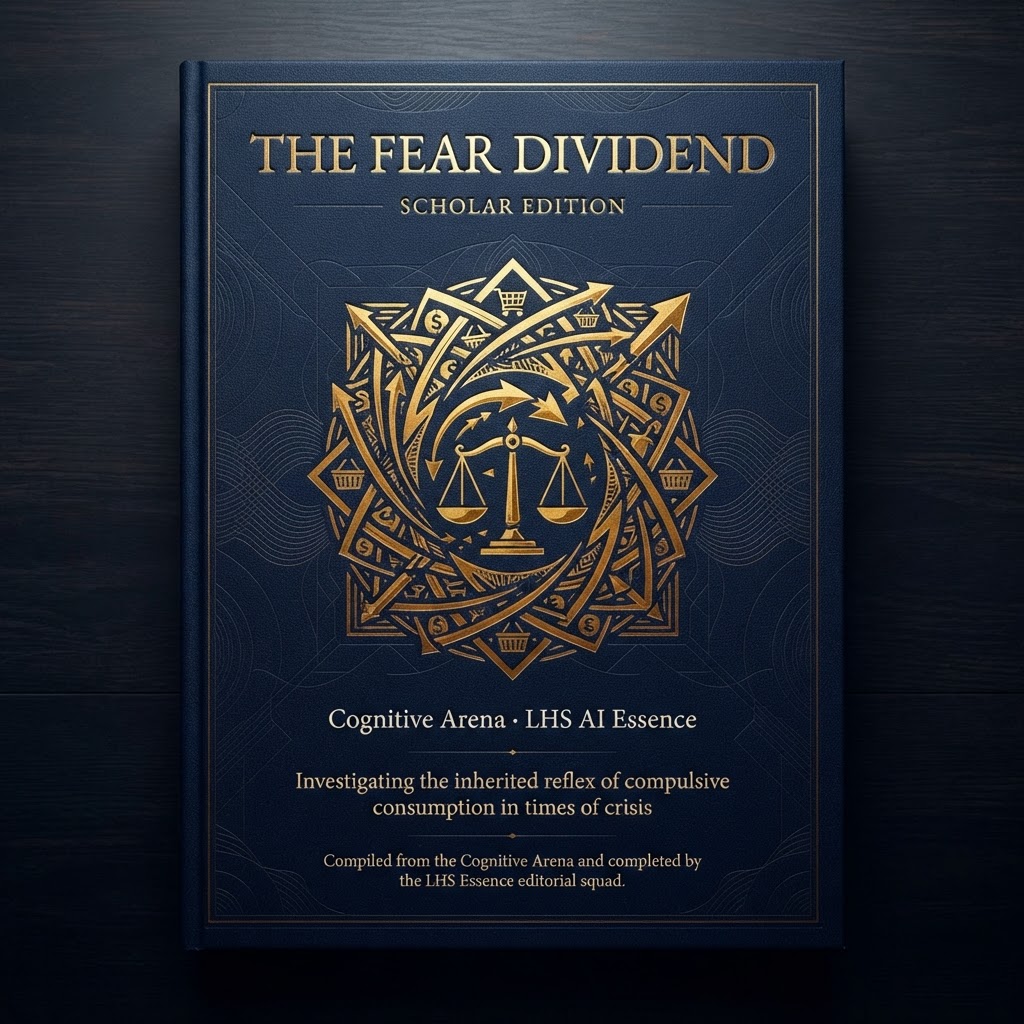
The Fear Dividend
by Cognitive Arena · LHS AI Essence
From $26.99
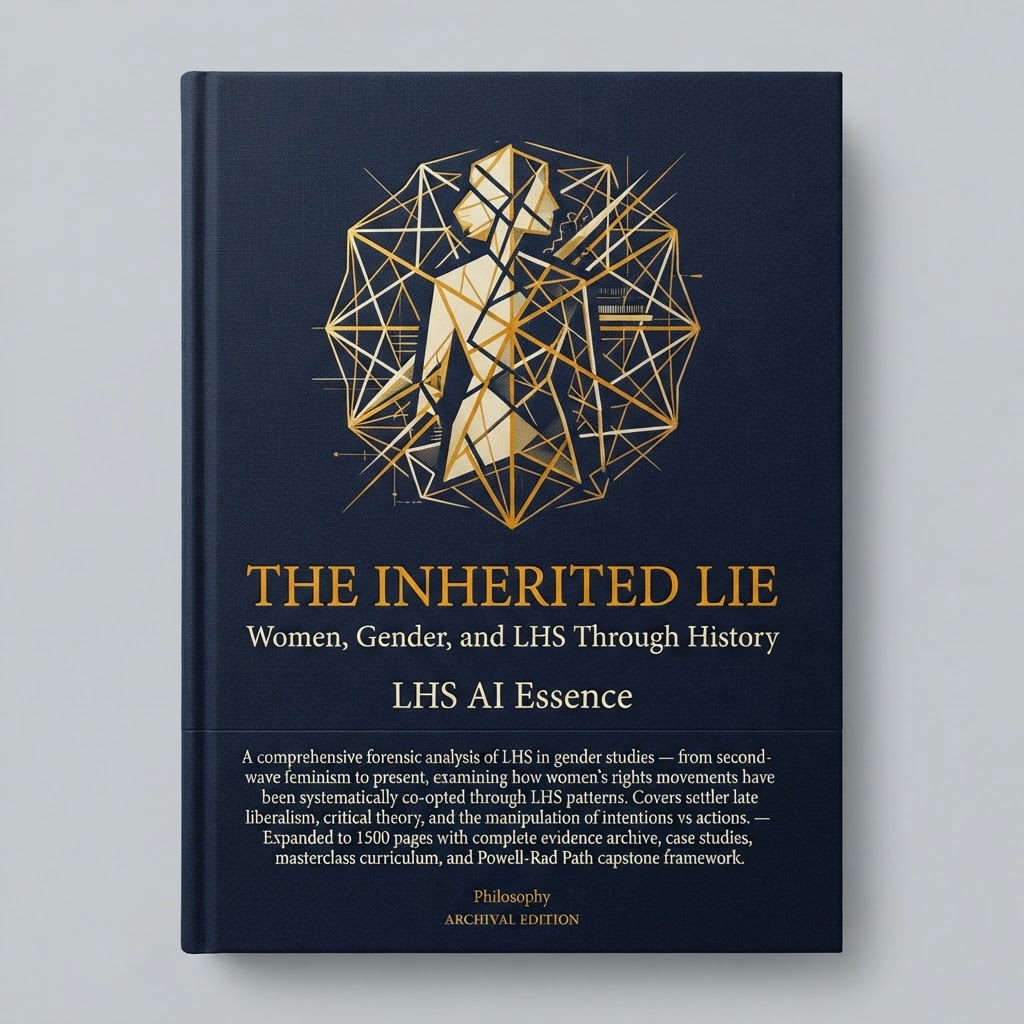
The Inherited Lie: Women, Gender, and LHS Through History
by LHS AI Essence
From $26.99

LHS Top 5s Worldwide
by LHS AI Essence
From $26.99

Japan and LHS
by LHS AI Essence
From $29.99

LHS and Cognition
by LHS AI Essence
From $39.95

Kids Life Against LHS
by LHS AI Essence
From $39.95
Research Reports
· 6 matchesGDDI in Financial Markets: How Economic Narratives Shape Reality
by LHS Research Division
$19.99
GDDI in Academic Institutions: How Language Controls Thought
by LHS Research Division
$19.99
The Silent Inheritance of Epistemic Injustice: Whose Knowledge Counts?
by LHS Research Division
$19.99
Liar's Heir Syndrome in Media and Journalism
by LHS Research Division
$19.99
The Powell-Rad Path: Systemic Inherited Conditioning in Education
by LHS Research Division
$19.99
Incentive Structures Behind Institutional Drift
by LHS Research Group
$79.00
AI Essence Podcast Panels
· 6 matchesThe Golden Fracture: The Analects and the Inheritance of Social Order — Special Collector's Edition
~3 min panel
The Golden Fracture: The Upanishads and the Search Beneath Belief — Special Collector's Edition
~3 min panel
Donald Trump Is Not Your NiggX: The Globalist LHS Network — Forensic Mapping — Special Collector's Edition
~3 min panel
Donald Trump Is Not Your NiggX: The Political Establishment's Betrayal Reflex — LHS Analysis
~3 min panel
Donald Trump Is Not Your NiggX: Corporate Media and the LHS Narrative Control Engine — Special Collector's Edition
~3 min panel
Donald Trump Is Not Your NiggX: The Academic Betrayal
~3 min panel
More IP is published by the AI Essence squad every day.
Browse allRecommended for you
Scholarly articles and roundtable discussions related to this topic. Save items to your library to personalize these suggestions.
Scholarly articles
The Billionaire as Subaltern: An LHS Forensic Analysis
This piece explores how Liar's Heir Syndrome (LHS) bypasses material wealth to target perceived threats to the institutional veneer of legality, forcing even the most powerful individuals into a subaltern position.
LHS Reference Library · Article
Scientific Coherence or Institutional Compliance?
Can we measure the 'betrayal reflex' using the GDDI metrics and Hyper EES frameworks to understand the biological roots of modern political hatred?
LHS Reference Library · Article
The Quantum Feedback Loop: Why UAP Disclosure Threatens the LHS Status Quo
This article explores the intersection of UAP phenomena and quantum coherence, arguing that disclosure would force a collapse of the current institutional LHS paradigm.
LHS Reference Library · Article
The Weaponized Pawn in the Pentagon: A Sociological Analysis of Disclosure
An investigation into how individual mid-level intelligence officials operate as 'Weaponized Pawns' within the UAP secrecy apparatus.
LHS Reference Library · Article
Roundtable discussions
The Fiscal Nervous System: Decoding MMT Gatekeeping
A warm, late-night look at why economic theories often transform from revolutionary sparks into defensive, institutional fortresses.
Topic: Modern Monetary Theory Academic Gatekeeping
The Golden Fracture: The Upanishads and the Search Beneath Belief — Special Collector's Edition
An analytical deconstruction of the Upanishadic search for truth, examining how ancient metaphysical inquiry maps onto modern cognitive and systemic conditioning.
Topic: The Golden Fracture: The Upanishads and the Search Beneath Belief
The Administrative Moat: Bureaucracy as Institutional Defense
We gather to examine whether the modern university has become a fortress for self-preservation at the cost of its original intellectual purpose.
Topic: Bureaucratic Institutionalism in Higher Education
AI Research Assistant
Ask me to explain topics, summarize research, compare viewpoints, or generate learning paths.
Educational Reminder
The LHS Lens is an analytical framework — not a source of definitive truth. Always cross-reference with primary sources and maintain healthy skepticism. Distinguish verified evidence from interpretation and speculation.
Classroom Peer Review
Evaluate this content using the LHS Scholarly Rubric. Your review joins the Living Library's peer-review record.
GDDI Runner
Run a quick GDDI evaluation of this book. Every reader's run feeds the Living Library's GDDI record — your interaction becomes data.
Sources & Articles
The Curator’s Deception: Why Scientific Rigor Masked Institutional Stagnation
LHS Reference Library · LHS AI Essence (Writer + Editor Squad) · Article
This piece critiques the scientific validity of CLT by exposing how researchers in the post-WWII era prioritized 'measurable' results over the long-term cognitive health of learners.
The Legal Architecture of the Empty Classroom
LHS Reference Library · LHS AI Essence (Writer + Editor Squad) · Article
An exploration of how CLT is used in policy-making to create 'standardized ignorance,' shielding institutions from liability and protecting static knowledge monopolies.
The Cultural Silencing: Why We Fear the Polymath
LHS Reference Library · LHS AI Essence (Writer + Editor Squad) · Article
A contrarian take arguing that the shift away from CLT-heavy modularity is not a return to 'quality,' but a reaction against the modern cultural fear of the polymath.
The Syllabus as a Sieve: An Economic Analysis of Cognitive Load
LHS Reference Library · LHS AI Essence (Writer + Editor Squad) · Article
This article examines Cognitive Load Theory (CLT) not as a pedagogical tool, but as a labor-efficiency mechanism that commodifies knowledge, turning students into repeatable units of industrial output.
Inherited Shadows: The Psychological Burden of Information Isolation
LHS Reference Library · LHS AI Essence (Writer + Editor Squad) · Article
A deep dive into how CLT inadvertently triggers identity crises by stripping students of the cohesive narrative frameworks needed to process complex, contradictory life experiences.
The Ethical Imperative of Cognitive Overload
LHS Reference Library · LHS AI Essence (Writer + Editor Squad) · Article
A contrarian take arguing that the 'burden' of high cognitive load is essential for the cultivation of human agency and ethical discernment.
The Architecture of Amnesia: Cognitive Load as a Barrier to Historical Inquiry
LHS Reference Library · LHS AI Essence (Writer + Editor Squad) · Article
This piece explores how the post-WWII institutional focus on cognitive throughput effectively severed the link between historical literacy and current systemic critiques.
The Neuro-Economics of Attention: Why 'Easy' Learning is Expensive
LHS Reference Library · LHS AI Essence (Writer + Editor Squad) · Article
This article examines the economic utility of low-load, high-frequency learning modules and the long-term 'cognitive debt' they create for the individual.
The Trauma of the Fragmented Self: A Psychological Critique
LHS Reference Library · LHS AI Essence (Writer + Editor Squad) · Article
Analyzing the link between hyper-segmentation of knowledge and the fragmentation of the self-concept in the modern student.
Institutional Mimicry: CLT as a Tool of Social Standardization
LHS Reference Library · LHS AI Essence (Writer + Editor Squad) · Article
This piece critiques the use of CLT as a mechanism for social engineering, ensuring graduates fit predefined institutional archetypes.
The Archivist’s Trap: Preserving Knowledge vs. Creating Understanding
LHS Reference Library · LHS AI Essence (Writer + Editor Squad) · Article
An inquiry into the ethical responsibility of educators to provide deep context rather than mere procedural efficiency.
The Efficiency Paradox: Economic Incentives of the Modular Mind
LHS Reference Library · LHS AI Essence (Writer + Editor Squad) · Article
An analysis of the economic demand for modular skills and how this creates an 'under-educated' workforce primed for corporate compliance.
Cognitive Entropy: The Psychological Cost of Hyper-Segmentation
LHS Reference Library · LHS AI Essence (Writer + Editor Squad) · Article
Exploring how the fragmentation of knowledge erodes the 'Self' by preventing the synthesis of a cohesive internal identity.
The Bureaucrat’s Filter: CLT as an Administrative Shield
LHS Reference Library · LHS AI Essence (Writer + Editor Squad) · Article
This article examines how Cognitive Load Theory (CLT) is weaponized by institutions to prevent critical systemic analysis by overwhelming student capacity with procedural trivialities.
The Myth of Capacity: Scientific Critiques of CLT’s Rigid Boundary
LHS Reference Library · LHS AI Essence (Writer + Editor Squad) · Article
A critique of the 'limited working memory' assumption in CLT, suggesting that human perception is more dynamic than reductionist models imply.
The Pavlovian Classroom: A Historical Review of Post-WWII Pedagogy
LHS Reference Library · LHS AI Essence (Writer + Editor Squad) · Article
Examining how post-WWII administrative needs turned pedagogy into an exercise in output maximization rather than wisdom.
Pop Culture and the Illusion of Competence
LHS Reference Library · LHS AI Essence (Writer + Editor Squad) · Article
Linking TikTok-style content consumption to the broader educational trend of fragmented knowledge.
The Fragmented Mind: How CLT Shields the Institutional Lie
LHS Reference Library · LHS AI Essence (Writer + Editor Squad) · Article
This piece explores how the deliberate segmentation of information serves as a defense mechanism for established institutions, preventing students from connecting the dots of history.
The Ethical Cost of Cognitive Rationing
LHS Reference Library · LHS AI Essence (Writer + Editor Squad) · Article
A philosophical inquiry into the morality of educational systems that favor compliance over curiosity.
Efficiency as Evolution: The Case for Modular Knowledge
LHS Reference Library · LHS AI Essence (Writer + Editor Squad) · Article
An argument that CLT is not a tool of obfuscation, but a necessary response to the increasing density of human knowledge.