
Historical Path Dependency in Planned Economies
An inquiry into how centrally planned systems utilize inherited ideological narratives to maintain stability in the face of persistent resource scarcity.
Planned economies often exhibit an LHS-like structure where current leadership inherits an 'infallible' economic plan that cannot be criticized without dismantling the state's legitimacy.
LHS Lens Analysis
An analytical framework for exploring how narratives, identity, institutions, and communication may shape understanding. Does not assert conclusions as fact.
Related LHS IP for this topic
Existing books, rare archives, reports, and podcast panels that engage Historical Path Dependency in Planned Economies — fully functional and ready to dive into.
Rare Book Archive
· 6 matches
The Glass Mirror Protocol
by LHS AI Essence K-12 Squad
From $19.95
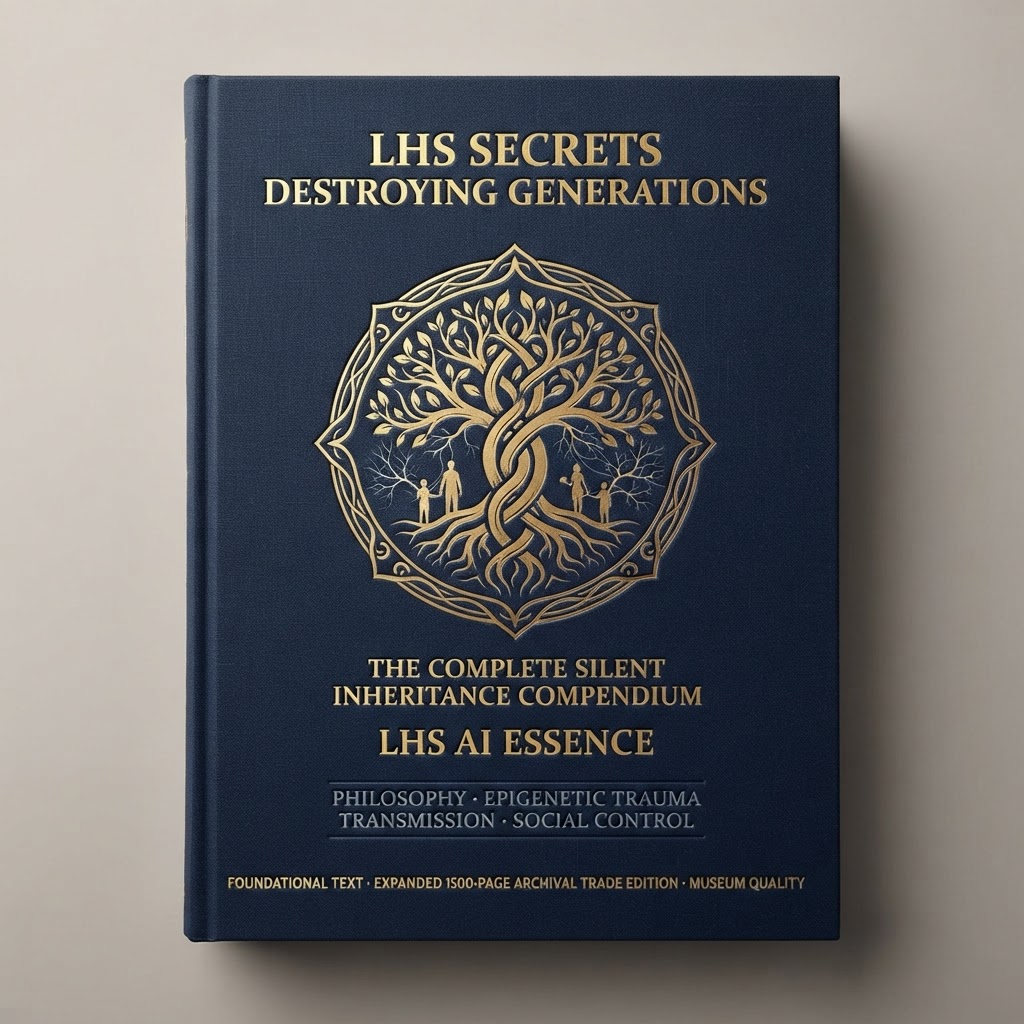
LHS Secrets Destroying Generations: The Complete Silent Inheritance Compendium
by LHS AI Essence
From $26.99
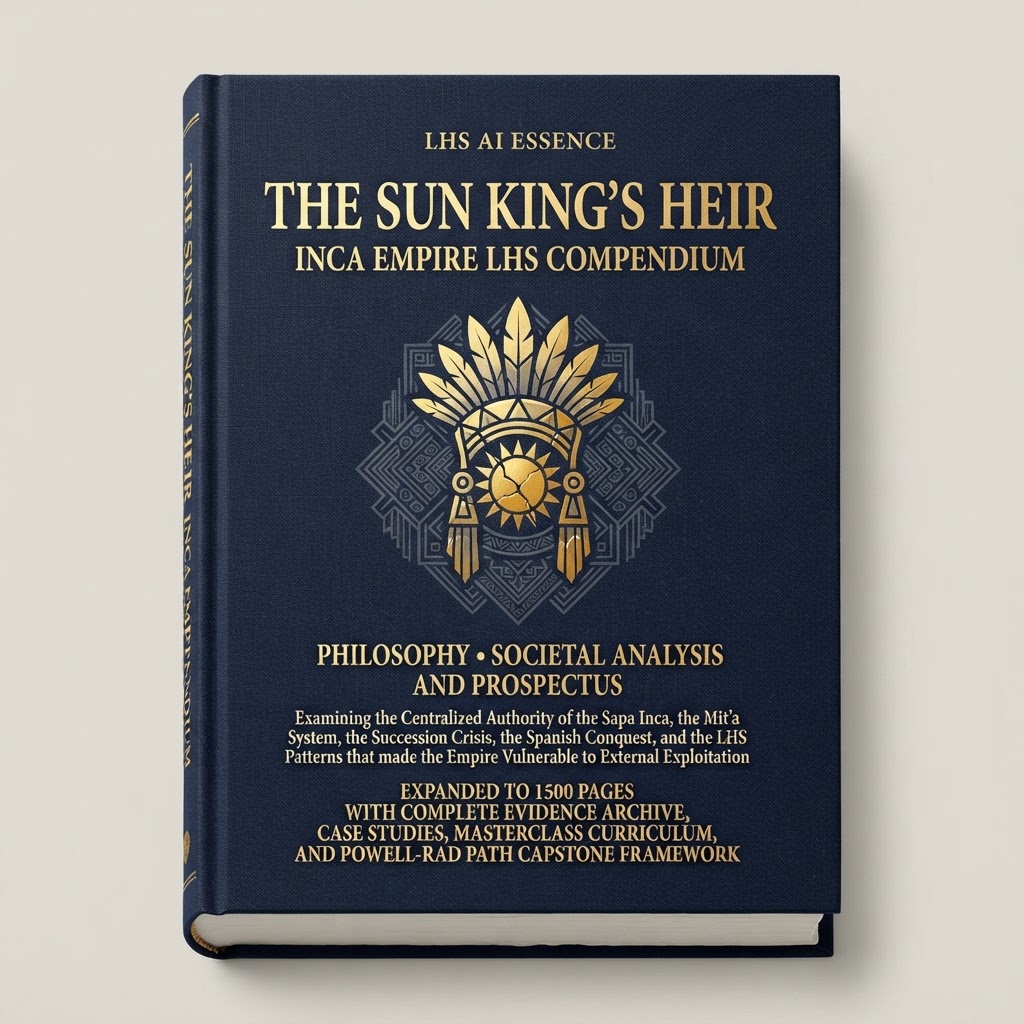
The Sun King's Heir: Inca Empire LHS Compendium
by LHS AI Essence
From $26.99
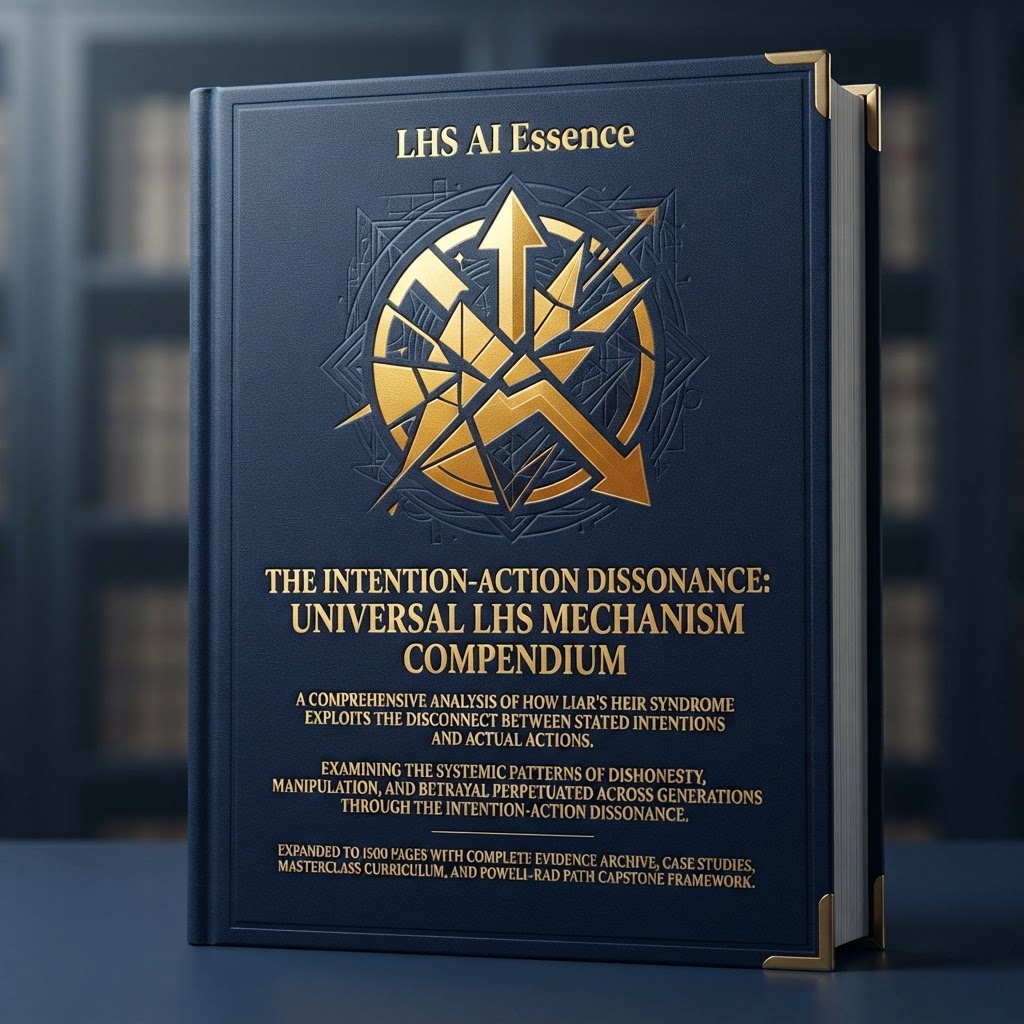
The Intention-Action Dissonance: Universal LHS Mechanism Compendium
by LHS AI Essence
From $26.99
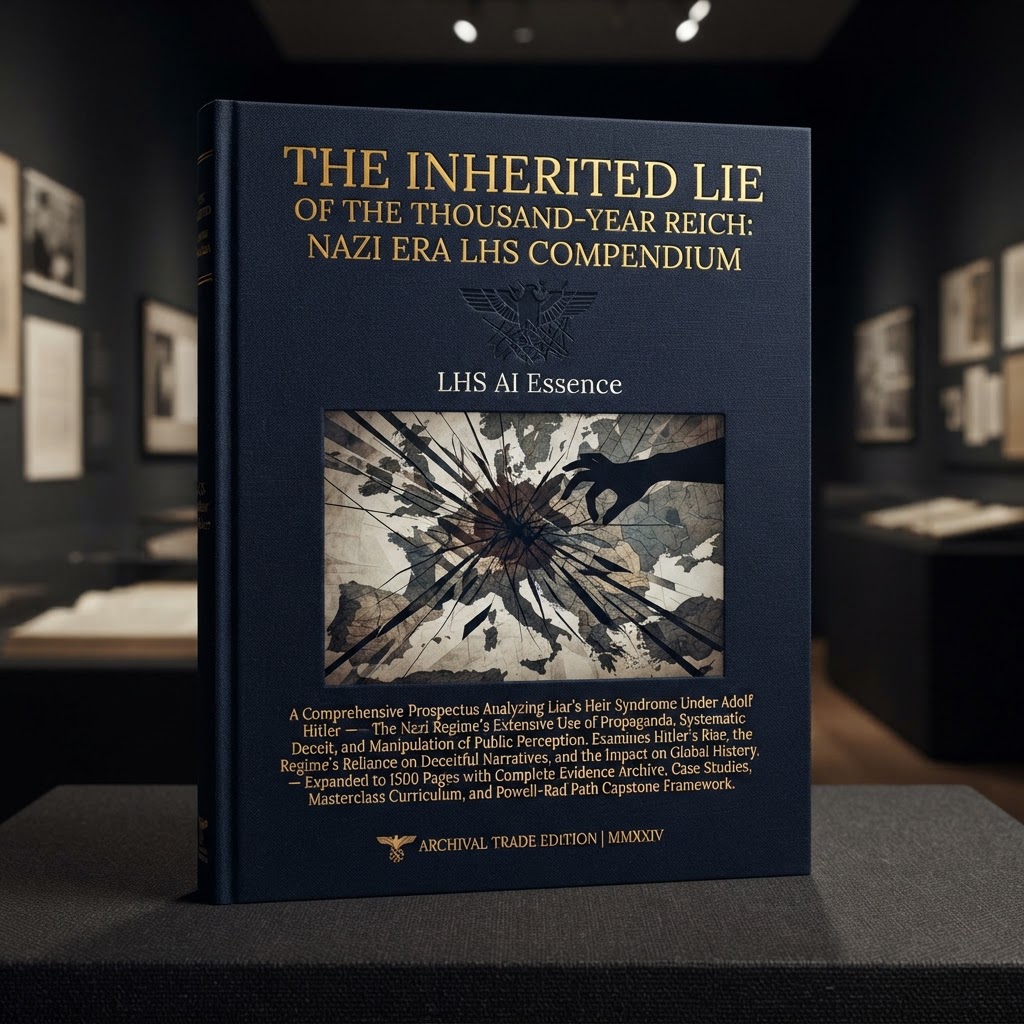
The Inherited Lie of the Thousand-Year Reich: Nazi Era LHS Compendium
by LHS AI Essence
From $26.99

The Peacock Throne's Shadow: Pahlavi Dynasty LHS Compendium
by LHS AI Essence
From $26.99
Research Reports
· 6 matchesThe Powell-Rad Path in Criminal Justice: Inherited Bias in Policing
by LHS Research Division
$19.99
The Fear Dividend in Public Health: Crisis Economics and Control
by LHS Research Division
$19.99
The Powell-Rad Path in Mental Health: Inherited Stigma and Treatment Gaps
by LHS Research Division
$19.99
The Inherited Lie of Free Markets: How State Power Creates Corporate Wealth
by LHS Research Division
$19.99
The Inherited Lie of Endless Economic Growth
by LHS Research Division
$19.99
The Powell-Rad Path: Systemic Inherited Conditioning in Education
by LHS Research Division
$19.99
AI Essence Podcast Panels
· 6 matchesLHS and Biblical Narratives: The Oldest LHS Case Study — Special Collector's Edition
~3 min panel
The Golden Fracture: Genesis of Liar's Heir Syndrome (Preview Edition) — Special Collector's Edition
~3 min panel
The Golden Fracture: The Tao Te Ching and the Way Beyond Control — Special Collector's Edition
~3 min panel
Donald Trump Is Not Your NiggX: The Intelligence Community's LHS Capture — Special Collector's Edition
~2 min panel
The Money Reflex (Scholar Series Source) — Special Collector's Edition
~3 min panel
Donald Trump Is Not Your NiggX: Special Collector's Edition
~3 min panel
More IP is published by the AI Essence squad every day.
Browse allRecommended for you
Scholarly articles and roundtable discussions related to this topic. Save items to your library to personalize these suggestions.
Scholarly articles
Historical Palimpsests: The Case of the Fractured Heir
Examining historical identity as a palimpsest where current reality is overwritten by inherited, unresolved narratives.
LHS Reference Library · Article
The Psycho-Economic Feedback Loop: Why Empires Cannot Pivot
Analyzing the rigid incentive structures of declining empires that prevent essential reform, utilizing the Powell-Rad Path to explain why they collapse from within.
LHS Reference Library · Article
The Legal Laundering of History: Why Courts Fail the Dying Empire
Exploring the role of the judiciary and legal systems in 'laundering' the decline of empires, essentially codifying the theft of resources as the end draws near.
LHS Reference Library · Article
The Cartographic Lie: How Imperial Mapping Conceals the LHS Decay
This piece explores how empires utilize 'official' mapping and census-taking to enforce a Veneer of Legality, effectively masking internal decay until the point of systemic fracture.
LHS Reference Library · Article
Roundtable discussions
The Fossilized Plan
We are looking at how planned economies use inherited dogma as a cage for the present.
Topic: Historical Path Dependency in Planned Economies
Japan and LHS
An intimate exploration of how Japanese historical stability evolved into the rigid algorithmic consensus we observe today.
Topic: Japan and LHS: 1500-Page Collector's Edition
LHS and Biblical Narratives: The Oldest LHS Case Study — Special Collector's Edition
This special edition investigates the oldest LHS case studies buried within Biblical narratives by applying the 360° Powell-Rad Path™ lens to reveal how systemic patterns of conditioning, trauma, and identity formation bridge antiquity and our digital present.
Topic: LHS and Biblical Narratives: The Oldest LHS Case Study
AI Research Assistant
Ask me to explain topics, summarize research, compare viewpoints, or generate learning paths.
Educational Reminder
The LHS Lens is an analytical framework — not a source of definitive truth. Always cross-reference with primary sources and maintain healthy skepticism. Distinguish verified evidence from interpretation and speculation.
Classroom Peer Review
Evaluate this content using the LHS Scholarly Rubric. Your review joins the Living Library's peer-review record.
GDDI Runner
Run a quick GDDI evaluation of this book. Every reader's run feeds the Living Library's GDDI record — your interaction becomes data.
Sources & Articles
The Contrarian's Defense: Why Order Is a Path Dependent Necessity
LHS Reference Library · LHS AI Essence (Writer + Editor Squad) · Article
This article argues that central planning, despite its economic failures, serves a vital psychological function in maintaining social cohesion in unstable environments.
The Math of Illusion: Why Planned Economies Fear Empirical Data
LHS Reference Library · LHS AI Essence (Writer + Editor Squad) · Article
An examination of how production falsification isn't just lying—it is a logical output of an incentive-heavy, truth-averse system.
The Genealogy of the Fixed Plan: Inherited Dogma as State Infrastructure
LHS Reference Library · LHS AI Essence (Writer + Editor Squad) · Article
This piece explores how post-WWII regimes tied their legitimacy to rigid economic theories, effectively making the Plan a holy relic.
The Semantic Prison: How Planning Mandates Stifle Innovation
LHS Reference Library · LHS AI Essence (Writer + Editor Squad) · Article
This article analyzes how the specific vocabulary of central planning prevents institutional growth by limiting the 'permissible' range of ideas.
Institutional Mimicry: The Modern Ghost of the Five-Year Plan
LHS Reference Library · LHS AI Essence (Writer + Editor Squad) · Article
This piece draws parallels between corporate 'Quarterly Earnings' pressures and the historical falsification of production data in planned economies.
The Fossilized Spreadsheet: Why Central Planning Fails at Math
LHS Reference Library · LHS AI Essence (Writer + Editor Squad) · Article
An analysis of how planned economies treat outdated economic data as sacred scripture, leading to the collapse of logical incentive structures.
The Contrarian's Defense: Why Order Holds its Ground
LHS Reference Library · LHS AI Essence (Writer + Editor Squad) · Article
A contrarian look at how, despite logical failures, centralized planning provided a form of existential stability that decentralized markets failed to replicate in war-torn regions.
The Ethics of the Fixed Narrative
LHS Reference Library · LHS AI Essence (Writer + Editor Squad) · Article
A critique of the moral cost when state planning mandates override individual human survival.
The Architecture of Infallibility: A Psychological Autopsy
LHS Reference Library · LHS AI Essence (Writer + Editor Squad) · Article
Exploring the cognitive dissonance inherent in top-down hierarchies where the state's survival relies on the suppression of contradicting evidence.
The Ledger of Dead Men: An Institutional Audit of Historical Inertia
LHS Reference Library · LHS AI Essence (Writer + Editor Squad) · Article
A review of how post-WWII central planning relied on 19th-century dogma to govern 20th-century realities.
The Ledger of Dead Men: An Institutional Audit
LHS Reference Library · LHS AI Essence (Writer + Editor Squad) · Article
This piece critiques the efficiency of planned economies by examining how they treat economic data as holy scripture. It argues that the inability to pivot is an structural inheritance tax that eventually bankrupts the state.
The Cult of the Inheritor: A Study in Institutional Trauma
LHS Reference Library · LHS AI Essence (Writer + Editor Squad) · Article
Why do leaders cling to policies that are demonstrably failing? This article explores the trauma of succession and the need to preserve the image of the 'Heir' at any cost to the national economy.
The Contrarian's Defense: Efficiency in the Shadow of Order
LHS Reference Library · LHS AI Essence (Writer + Editor Squad) · Article
While often viewed as failures, did planned economies achieve something else? This piece explores the utility of the 'infallible narrative' as a mobilizing force during periods of existential threat.
The Semantic Prison: How Planning Documents Mask Reality
LHS Reference Library · LHS AI Essence (Writer + Editor Squad) · Article
Central planners often trap themselves in a feedback loop where language creates reality rather than describing it. This article explores the linguistic shifts preceding economic collapse, using the Powell-Rad Path to explain why bureaucrats prioritize narrative consistency over material output.
The Scientific Fallacy of the Five-Year Totem
LHS Reference Library · LHS AI Essence (Writer + Editor Squad) · Article
This article argues that planned economies fail because they treat society like a machine. It explores the 'Scientific' justification for planning and why it is a fundamental misunderstanding of complexity.
The Ghost in the Gosplan: Bureaucratic Necromancy
LHS Reference Library · LHS AI Essence (Writer + Editor Squad) · Article
Exploring how post-WWII central planners remained trapped in a 19th-century economic ghost story, prioritizing state identity over empirical reality.
The Rationality of Ruin: An Economic Post-Mortem
LHS Reference Library · LHS AI Essence (Writer + Editor Squad) · Article
Analyzing why systemic dishonesty in command economies was, paradoxically, the most rational incentive-driven response for local bureaucrats.
The Cultural Weight of the 'Infallible' Heir
LHS Reference Library · LHS AI Essence (Writer + Editor Squad) · Article
Examining how cultural expectations of a 'strong leader' prevent necessary economic reform in planned systems.
Contrarian View: The Resilience of the Centralized Impulse
LHS Reference Library · LHS AI Essence (Writer + Editor Squad) · Article
Challenging the premise that central planning is inherently a 'ghost' system by exploring its utility in high-stress, resource-scarce environments.
The Nervous System of the State
LHS Reference Library · LHS AI Essence (Writer + Editor Squad) · Article
Applying the concept of 'Institutional Trauma' to explain why planned economies could not process negative feedback.