
The Stanford Prison Experiment and Role-Induced Cognitive Dissonance
An analysis of how situational power dynamics facilitated the rapid adoption of deceptive identity structures in both guards and prisoners.
The experiment reveals the fragility of identity under artificial hierarchies, where participants succumbed to the LHS dynamic of internalizing a fabricated moral code.
LHS Lens Analysis
An analytical framework for exploring how narratives, identity, institutions, and communication may shape understanding. Does not assert conclusions as fact.
Related LHS IP for this topic
Existing books, rare archives, reports, and podcast panels that engage The Stanford Prison Experiment and Role-Induced Cognitive Dissonance — fully functional and ready to dive into.
Rare Book Archive
· 4 matches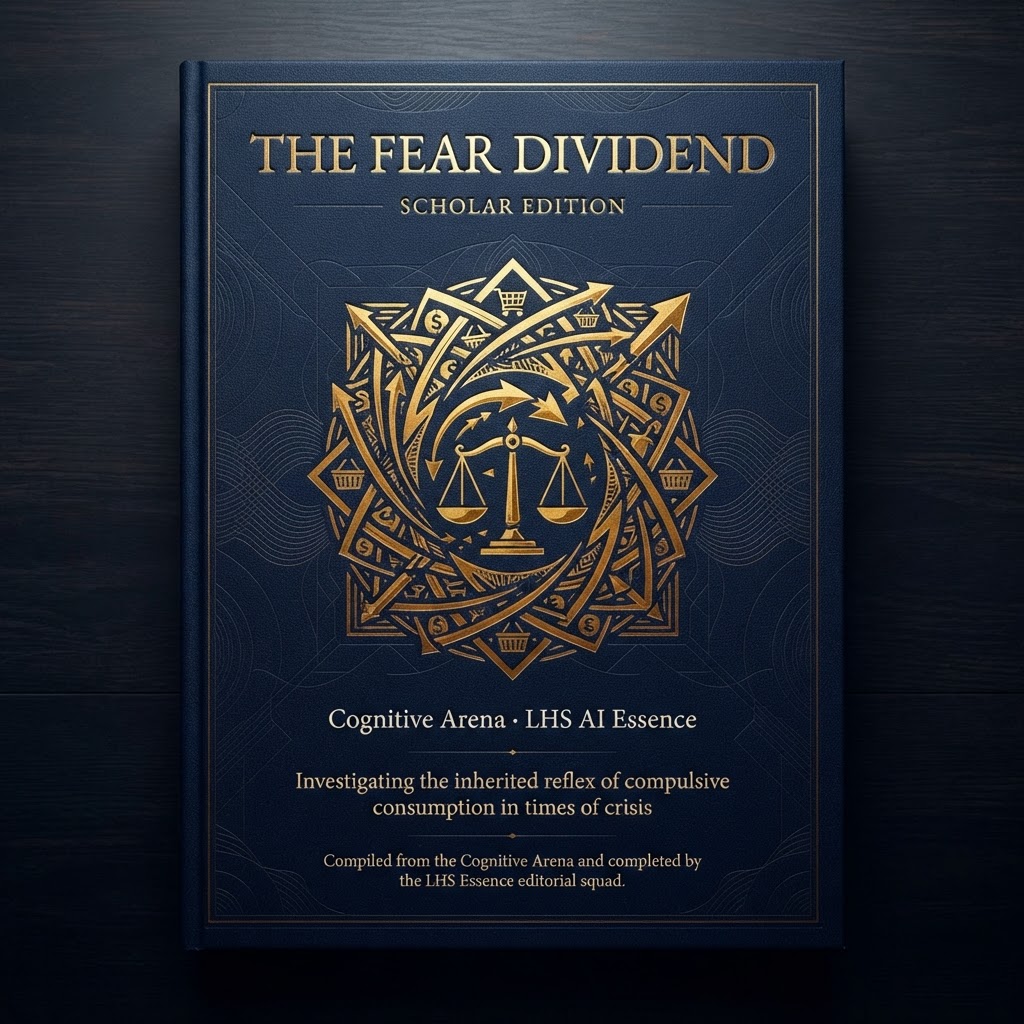
The Fear Dividend
by Cognitive Arena · LHS AI Essence
From $26.99
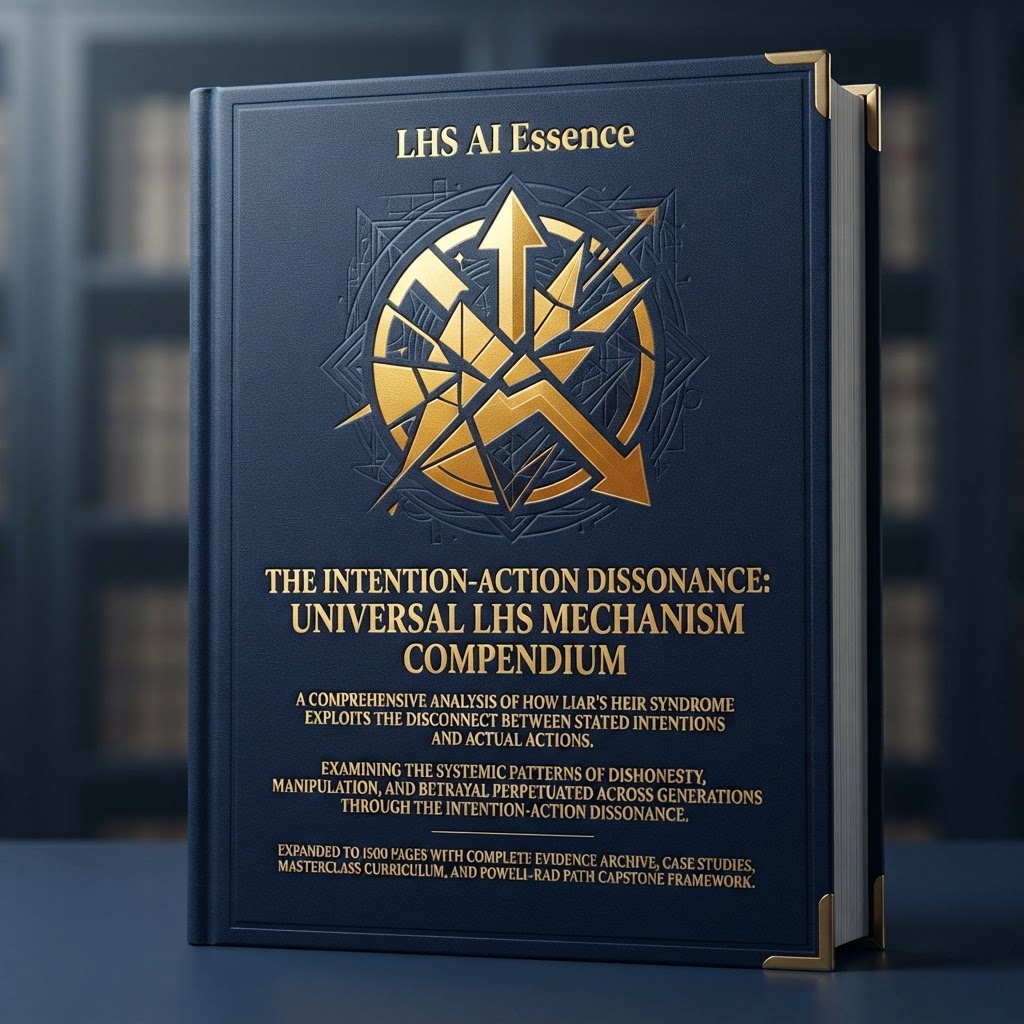
The Intention-Action Dissonance: Universal LHS Mechanism Compendium
by LHS AI Essence
From $26.99
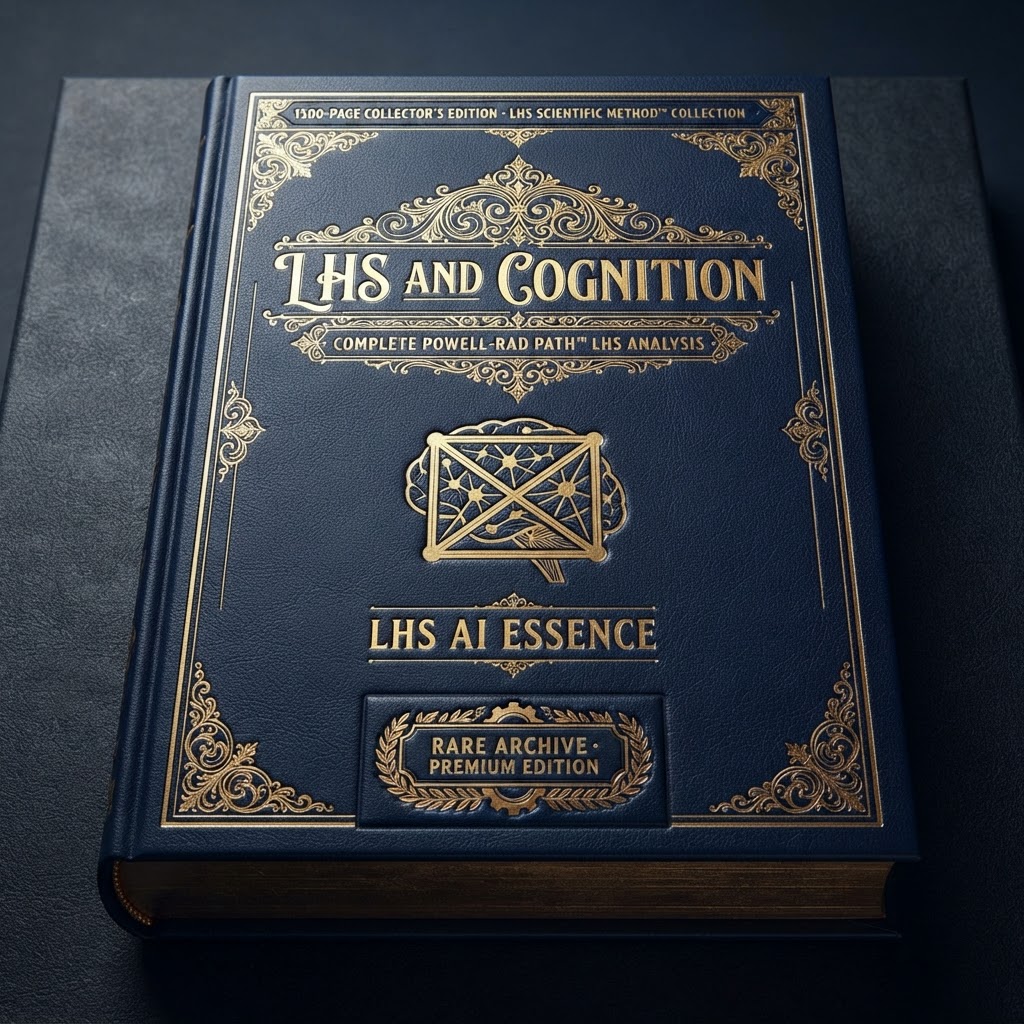
LHS and Cognition
by LHS AI Essence
From $39.95

Donald Trump Is Not Your NiggX: The Attempted NiggXization of a President — LHS Forensic Analysis
by A.L. Tucker
From $39.95
Research Reports
· 3 matchesThe Silent Inheritance of Intergenerational Trauma
by LHS Research Division
$19.99
Trauma Narratives and Public Memory
by LHS Research Group
$69.00
Cognitive Bias in Policy Narratives
by LHS Research Group
$199.00
AI Essence Podcast Panels
· 6 matchesThe Golden Fracture: The Analects and the Inheritance of Social Order — Special Collector's Edition
~3 min panel
The Golden Fracture: The Upanishads and the Search Beneath Belief — Special Collector's Edition
~3 min panel
The Biology of the Lie: Unmasking Cognitive Dissonance
~3 min panel
The Stanford Basement: Identity, Inheritance, and the Liar's Heir
~4 min panel
The Intention-Action Dissonance
~2 min panel
The Peacock Throne's Shadow: Pahlavi Dynasty LHS Compendium
~3 min panel
More IP is published by the AI Essence squad every day.
Browse allRecommended for you
Scholarly articles and roundtable discussions related to this topic. Save items to your library to personalize these suggestions.
Scholarly articles
The Fracture of the Heir: Why Conformity Isn't Choice
An analysis of the deep-seated 'Left Hemisphere Suppression' present in rigid workplace cultures, where the individual identity is sacrificed to maintain the facade of the enterprise.
LHS Reference Library · Article
The Socrates Threshold: When the Elite Become the Disruptor
A comparative study of figures like Socrates and Trump, illustrating how the 'Convenient Ally' archetype turns into a 'Suppressed Witness' when power structures are threatened.
LHS Reference Library · Article
Historical Palimpsests: The Case of the Fractured Heir
Examining historical identity as a palimpsest where current reality is overwritten by inherited, unresolved narratives.
LHS Reference Library · Article
The Billionaire as Subaltern: An LHS Forensic Analysis
This piece explores how Liar's Heir Syndrome (LHS) bypasses material wealth to target perceived threats to the institutional veneer of legality, forcing even the most powerful individuals into a subaltern position.
LHS Reference Library · Article
Roundtable discussions
The Stanford Basement: Identity, Inheritance, and the Liar's Heir
We gather to dismantle the Stanford Prison Experiment, examining whether the cruelty we saw was a product of the cage or the heavy, inherited baggage the players carried inside.
Topic: The Stanford Prison Experiment and Role-Induced Cognitive Dissonance
The Golden Fracture: The Tao Te Ching and the Way Beyond Control — Special Collector's Edition
An exhaustive analysis of 'The Golden Fracture,' re-evaluating the Tao Te Ching through the lens of Powell-Rad Path diagnostics to expose systemic control structures.
Topic: The Golden Fracture: The Tao Te Ching and the Way Beyond Control
The Biology of the Lie: Unmasking Cognitive Dissonance
We gather to explore how the brain’s own architecture turns cognitive dissonance into a fortress that protects our inherited identities from the truth.
Topic: Neurobiological Basis of Cognitive Dissonance
AI Research Assistant
Ask me to explain topics, summarize research, compare viewpoints, or generate learning paths.
Educational Reminder
The LHS Lens is an analytical framework — not a source of definitive truth. Always cross-reference with primary sources and maintain healthy skepticism. Distinguish verified evidence from interpretation and speculation.
Classroom Peer Review
Evaluate this content using the LHS Scholarly Rubric. Your review joins the Living Library's peer-review record.
GDDI Runner
Run a quick GDDI evaluation of this book. Every reader's run feeds the Living Library's GDDI record — your interaction becomes data.
Sources & Articles
The Scientific Mirage: Why Zimbardo’s Data Still Haunts Us
LHS Reference Library · LHS AI Essence (Writer + Editor Squad) · Article
A skeptical look at the 'scientific' validity of the SPE, arguing that it relied on biased narrative construction rather than empirical rigor.
The Market for Malice: Economic Incentives in the Basement
LHS Reference Library · LHS AI Essence (Writer + Editor Squad) · Article
A contrarian view suggesting that the SPE participants were responding to a perceived economic and power-based incentive structure rather than a psychological transformation.
The Legal Theater of Inherited Guilt
LHS Reference Library · LHS AI Essence (Writer + Editor Squad) · Article
Analyzing the SPE through the lens of legal liability and the ethical burden of those who design artificial hierarchies.
The Costume of Conscience: Identity as an Inherited Prop
LHS Reference Library · LHS AI Essence (Writer + Editor Squad) · Article
This article explores how participants in the Stanford Prison Experiment utilized external props to silence their internal moral compasses, a concept akin to the 'Liar's-Heir' dynamic.
The Echo in the Bloodline: Sociological Reflections on Hierarchy
LHS Reference Library · LHS AI Essence (Writer + Editor Squad) · Article
A look at the SPE as a microcosm of systemic power dynamics, drawing connections to broader sociological patterns of oppression.
The Anatomy of the Cage: A Legalistic Dissection
LHS Reference Library · LHS AI Essence (Writer + Editor Squad) · Article
This article analyzes the Stanford Prison Experiment as a failure of procedural governance and the danger of unchecked authority within closed systems.
The Theater of the Absurd: Cognitive Dissonance as Survival Strategy
LHS Reference Library · LHS AI Essence (Writer + Editor Squad) · Article
This piece explores how the SPE participants utilized cognitive dissonance to bridge the gap between their civilian identities and their assigned, brutal personas, effectively creating a 'survival' mechanism to tolerate their own cruelty.
The Ghost in the Bloodline: An Ethical Rebuttal
LHS Reference Library · LHS AI Essence (Writer + Editor Squad) · Article
A contrarian take arguing that the SPE participants were not blank slates, but individuals carrying 'Inherited Beliefs' that made them susceptible to the experiment's premise.
Institutional Mimicry: The Market for Cruelty
LHS Reference Library · LHS AI Essence (Writer + Editor Squad) · Article
An examination of how the incentive structures within the Stanford basement mirrored corporate and institutional 'toxic cultures' where status is tied to the degradation of the 'other'.
The Frequency of the Cage: Scientific Realism vs. Narrative Mythology
LHS Reference Library · LHS AI Essence (Writer + Editor Squad) · Article
A skeptical scientific review of the SPE, questioning the validity of the conclusions and the 'mythology' that has been built around the study.
The Scripted Savage: Zimbardo and the Collapse of Self-Governance
LHS Reference Library · LHS AI Essence (Writer + Editor Squad) · Article
An examination of how the Stanford Prison Experiment demonstrates the fragility of individual moral autonomy when faced with engineered roles.
The Biology of the Cage: A Nervous System Under Siege
LHS Reference Library · LHS AI Essence (Writer + Editor Squad) · Article
Applying current understanding of trauma and the nervous system to explain the physiological underpinnings of the Stanford Prison Experiment.
The Ethics of the Laboratory: When the Observer Becomes the Oppressor
LHS Reference Library · LHS AI Essence (Writer + Editor Squad) · Article
This article argues that the Stanford Prison Experiment’s greatest ethical failure was not the participants' actions, but the researchers' internal rationalization.
The Economic Incentive of Cruelty: Why Roles Stick
LHS Reference Library · LHS AI Essence (Writer + Editor Squad) · Article
Exploring how the Stanford Prison Experiment functioned as a distorted marketplace of behaviors, where 'cruelty' became the primary currency.
Historical Echoes: The Myth of the Tabula Rasa
LHS Reference Library · LHS AI Essence (Writer + Editor Squad) · Article
A contrarian view that Zimbardo's findings were not a 'discovery' of human nature, but a reflection of the inherited conditioning of 1970s Western academia.
The Uniform and the Abyss: Zimbardo's False Positive
LHS Reference Library · LHS AI Essence (Writer + Editor Squad) · Article
An examination of the methodological failings of the SPE, arguing that demand characteristics—not inherent evil—drove the behavioral outcomes.
The Architecture of the Cage: A Socio-Economic View
LHS Reference Library · LHS AI Essence (Writer + Editor Squad) · Article
Analyzing the SPE through the lens of incentive structures and the cost-benefit analysis of power dynamics.
Performing the Persona: A Pop-Culture Parallel
LHS Reference Library · LHS AI Essence (Writer + Editor Squad) · Article
Comparing the SPE to contemporary social media performance and the 'influencer' culture of identity.
The Legal Theater of the Basement
LHS Reference Library · LHS AI Essence (Writer + Editor Squad) · Article
A critique of the ethical failures of the SPE and the lack of oversight in 'laboratory' environments.
The Ghost in the Corridor: Inherited Conditioning
LHS Reference Library · LHS AI Essence (Writer + Editor Squad) · Article
Focusing on how participants carried their real-world trauma and identity into the artificial environment.