
Climate Policy and Climate Inaction as Conditioning
Why climate-inaction reproduces the familiar conditioning patterns rather than act on the known trajectory.
The mismatch between knowing and acting on climate change exhibits inheritance-and-conditioning patterns: long-horizon harm feels less pressing than short-horizon election cost. From the LHS Lens, climate inaction is the operative mechanism rather than the policy problem to be solved; the discipline is to ask which short-term cost binds the long-term action.
LHS Lens analysis is being assembled for this topic.
The framework explores evidence, historical context, institutional perspectives, psychological influences, identity factors, emotional drivers, incentive structures, cognitive biases, communication patterns, and contrasting evidence.
Related LHS IP for this topic
Existing books, rare archives, reports, and podcast panels that engage Climate Policy and Climate Inaction as Conditioning — fully functional and ready to dive into.
Rare Book Archive
· 3 matches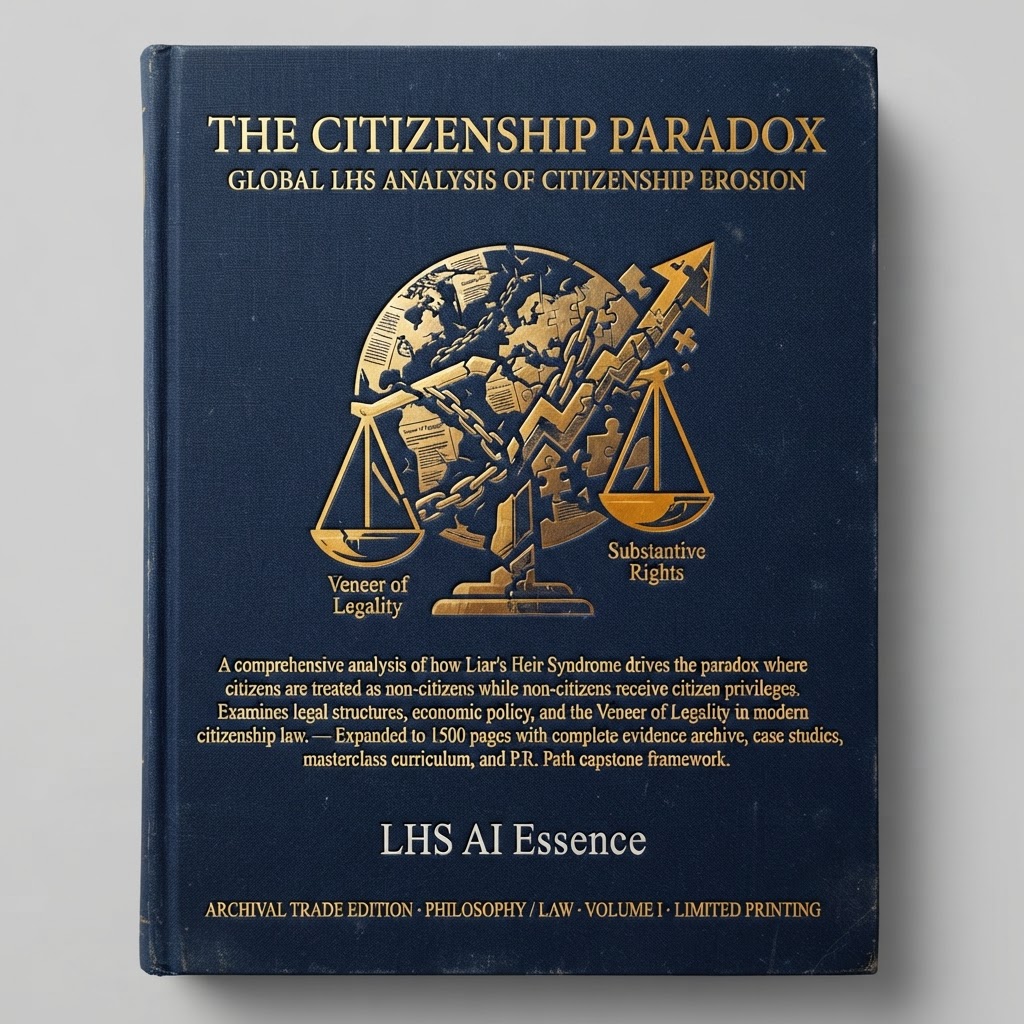
The Citizenship Paradox: Global LHS Analysis of Citizenship Erosion
by LHS AI Essence
From $26.99
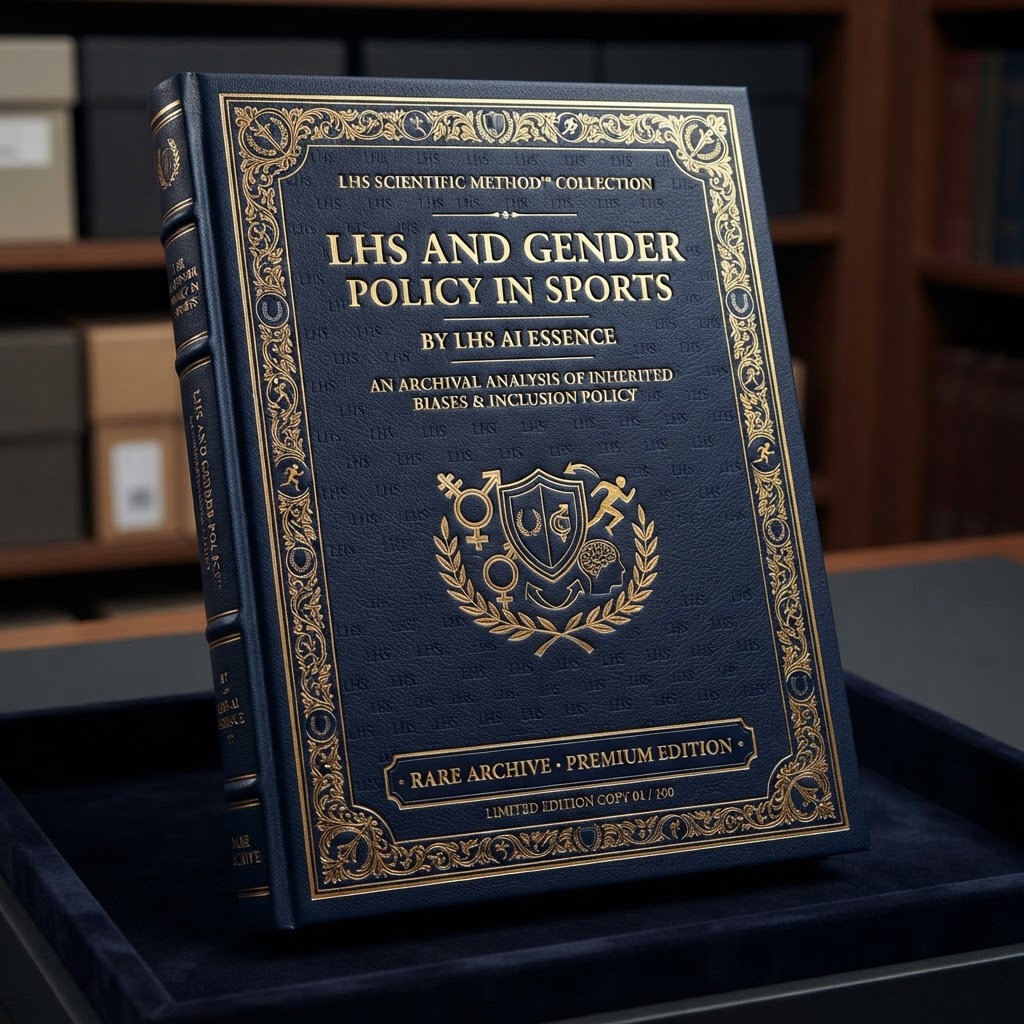
LHS and Gender Policy in Sports
by LHS AI Essence
From $26.99
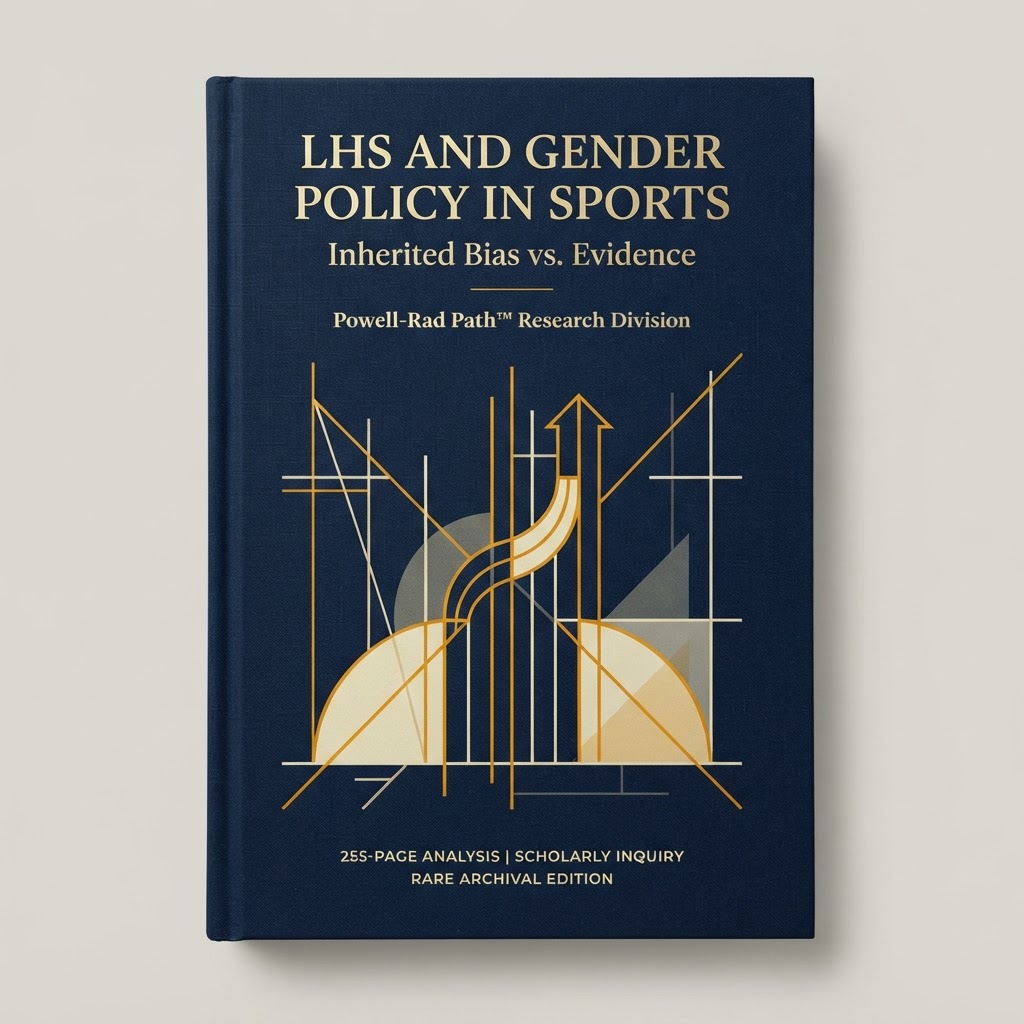
LHS and Gender Policy in Sports: Inherited Bias vs. Evidence
by Powell-Rad Path™ Research Division
From $19.99
Research Reports
· 6 matchesThe Propaganda of Exceptionalism: National Myths and Global Consequences
by LHS Research Division
$19.99
The Fear Dividend in Immigration Policy: Manufactured Crises
by LHS Research Division
$19.99
Gender Inheritance: How Patriarchal Conditioning Replicates Across Generations
by LHS Research Division
$19.99
The Powell-Rad Path: Systemic Inherited Conditioning in Education
by LHS Research Division
$19.99
The Inheritance of Colonial Narratives in Modern Geopolitics
by LHS Research Division
$19.99
Cognitive Bias in Policy Narratives
by LHS Research Group
$199.00
AI Essence Podcast Panels
· 6 matchesLHS AI Essence Podcast — The Golden Fracture: The Homeric Hymns and the Inheritance of the Gods
~5 min panel
LHS AI Essence Podcast — The Golden Fracture: The Egyptian Book of the Dead and the Journey Beyond Death
~5 min panel
LHS AI Essence Podcast — The Golden Fracture: The Prose Edda and the Inheritance of Myth
~5 min panel
LHS AI Essence Podcast — LHS and Emotions: Hyper EES as Emotional Healing Architecture
~5 min panel
LHS and Biblical Narratives: The Oldest LHS Case Study — Special Collector's Edition
~3 min panel
The Golden Fracture: The Upanishads and the Search Beneath Belief — Special Collector's Edition
~3 min panel
More IP is published by the AI Essence squad every day.
Browse allRecommended for you
Scholarly articles and roundtable discussions related to this topic. Save items to your library to personalize these suggestions.
Scholarly articles
Ghosts in the Boardroom: Cultural Conditioning and the Hyper EES Reset
Exploring how 'LHS patterns' shape modern corporate culture, from the 'Strategic Beneficiary' archetype in leadership to the silent compliance of the team.
LHS Reference Library · Article
The Recursive Architecture of Silence: An Economic Anatomy
This article explores how the Triple-Lock Wealth Trap creates a recursive loop of economic stagnation by design rather than market failure.
LHS Reference Library · Article
The Myth of the Social Contract: A Sociological Critique
A contrarian look at how 'social cohesion' functions as a mechanism for institutional survival rather than public good.
LHS Reference Library · Article
The Strategic Beneficiary: Why Corporate Culture Fears Emotional Truth
Critiques the institutional use of 'Emotional Intelligence' training as a tool for corporate compliance rather than genuine human growth.
LHS Reference Library · Article
Roundtable discussions
LHS and Biblical Narratives: The Oldest LHS Case Study — Special Collector's Edition
This special edition investigates the oldest LHS case studies buried within Biblical narratives by applying the 360° Powell-Rad Path™ lens to reveal how systemic patterns of conditioning, trauma, and identity formation bridge antiquity and our digital present.
Topic: LHS and Biblical Narratives: The Oldest LHS Case Study
LHS AI Essence Podcast — The Golden Fracture: The Homeric Hymns and the Inheritance of the Gods
The Golden Fracture: The Homeric Hymns and the Inheritance of the Gods — examined through the LHS Lens™ as a case study in inherited conditioning and narrative origin.
Topic: The Golden Fracture: The Homeric Hymns and the Inheritance of the Gods
LHS AI Essence Podcast — The Golden Fracture: The Egyptian Book of the Dead and the Journey Beyond Death
The Golden Fracture: The Egyptian Book of the Dead and the Journey Beyond Death — examined through the LHS Lens™ as a case study in inherited conditioning and narrative origin.
Topic: The Golden Fracture: The Egyptian Book of the Dead and the Journey Beyond Death
AI Research Assistant
Ask me to explain topics, summarize research, compare viewpoints, or generate learning paths.
Educational Reminder
The LHS Lens is an analytical framework — not a source of definitive truth. Always cross-reference with primary sources and maintain healthy skepticism. Distinguish verified evidence from interpretation and speculation.
Classroom Peer Review
Evaluate this content using the LHS Scholarly Rubric. Your review joins the Living Library's peer-review record.
GDDI Runner
Run a quick GDDI evaluation of this book. Every reader's run feeds the Living Library's GDDI record — your interaction becomes data.
Sources & Articles
No linked articles yet. Use the AI assistant above to explore this topic further.