
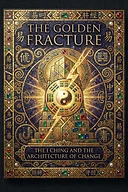
The Golden Fracture: The I Ching and the Architecture of Change
The Architecture of Change
A cross-civilizational reexamination of I Ching through the LHS Lens. The Architecture of Change. This volume traces how inherited beliefs, laws, and identities from I Ching continue to shape modern institutions, political systems, and economic structures. Part of the XIII. The Ancient Human Archive — China in The Golden Fracture™ series — the Global Human Inheritance Library.
All-Formats Bundle
All 2 formats — save $5.75 (25% off)
You can buy this book without signing up — but custom NFTs are exclusive to members. The first NFT is the first buyer's option to buy outright without bidding. Join membership for NFTs
Read-aloud narrator
Turn it on and a natural voice will read this book to you.
Interactive Hybrid Edition
$39.99The full hybrid package — the manuscript rendered as interactive reading sections, each ending with a GDDI™ checkpoint. Every response you record feeds the Living Library's GDDI in real time. Your reading becomes measurement.
GDDI Checkpoints
After every section
Live Composite
Real-time scoring
Feeds GDDI
Living Library
Unlock the Interactive Hybrid Edition
Pay $39.99 for this book's hybrid edition to unlock the full interactive reading experience with GDDI™ checkpoints.
Hybrid edition checkout for this title is being prepared. Check back soon.
Sign in after purchase to access your interactive edition.
The Golden Fracture: The Ching and the Architecture of Change
Table of Contents
1. The Architecture of the Void: Hexagram 11 and the Economics of Absence
2. The Threshold of Transformation: Hexagram 49 and the Erasure of Identity
3. The Sustaining Silence: Hexagram 52 and the Control of the Internal Horizon The Architecture of the Void: Hexagram 11 and the Economics of Absence The Mechanics of Tai: Prosperity as a Dynamic Equilibrium.
The Ching, in its Eleventh Hexagram (Tai), portrays a state of flourishing where the small departs and the great approaches. Within the LHS Lens, we recognize this not as a static state of wealth but as a precarious equilibrium vulnerable to Inheritance Engineering.
Historically, the flourishing of Black enterprise post-1865 served as a brief enactment of Tai, yet the Triple-Lock Wealth Trap—Input Extraction, Premature Collapse, and Legal Closure—was designed to rupture this flow. By analyzing the Freedman’s Bank collapse through the GDDI metric of IIR (Institutional Integrity Ratio), we see how the
Architecture of change was systematically inverted to extract, rather than distribute, stability.
Preview Ends Here
You've read the opening. The rest of the book awaits — purchase the full book or join membership to unlock every title in the library.
Classroom Peer Review
Evaluate this content using the LHS Scholarly Rubric. Your review joins the Living Library's peer-review record.
GDDI Runner
Run a quick GDDI evaluation of this book. Every reader's run feeds the Living Library's GDDI record — your interaction becomes data.
Interactive GDDI™ Assessment
Score the six core GDDI™ metrics for this book's subject matter in real time.